

My research interests ...
Infrastructure - Digital Transformation in Construction - Federated Digital Platforms - Future of Engineering
I have been teaching construction economics and construction business management at HTWG since 2019. My research interests focus on infrastructure planning and development, the future of the engineering profession in the face of complex global challenges and opportunities such as climate change and the fourth industrial revolution.
CoKLIMAx - Application of COPERNICUS data for climate-relevant urban planning using the example of water, heat and vegetation.
Development of low-threshold tools and efficient work processes for data collection, processing, analysis and application by municipalities - Specific climate adaptation and resilience measures can be efficiently designed and implemented at the regional and local level. Climate and environmental databases are critical for achieving the Sustainable Development Goals (SDGs) and for efficiently planning and implementing appropriate climate action: Available databases can serve as important starting points for municipalities to identify needs, prioritize resources, and allocate investments, taking into account usually tight budget constraints.

High-quality geospatial, climate and environmental data are now available - data from remote sensing, e.g. Copernicus services, will be crucial. There are forward-looking approaches to using such data to derive forecasts for urban planning process optimization by city governments. At the municipal level, however, the existing data have so far only been used to a limited extent, as there are no practical tools for urban planning with which remote sensing data can be merged with local data, combined in a meaningful way, and further processed and applied in municipal planning processes.
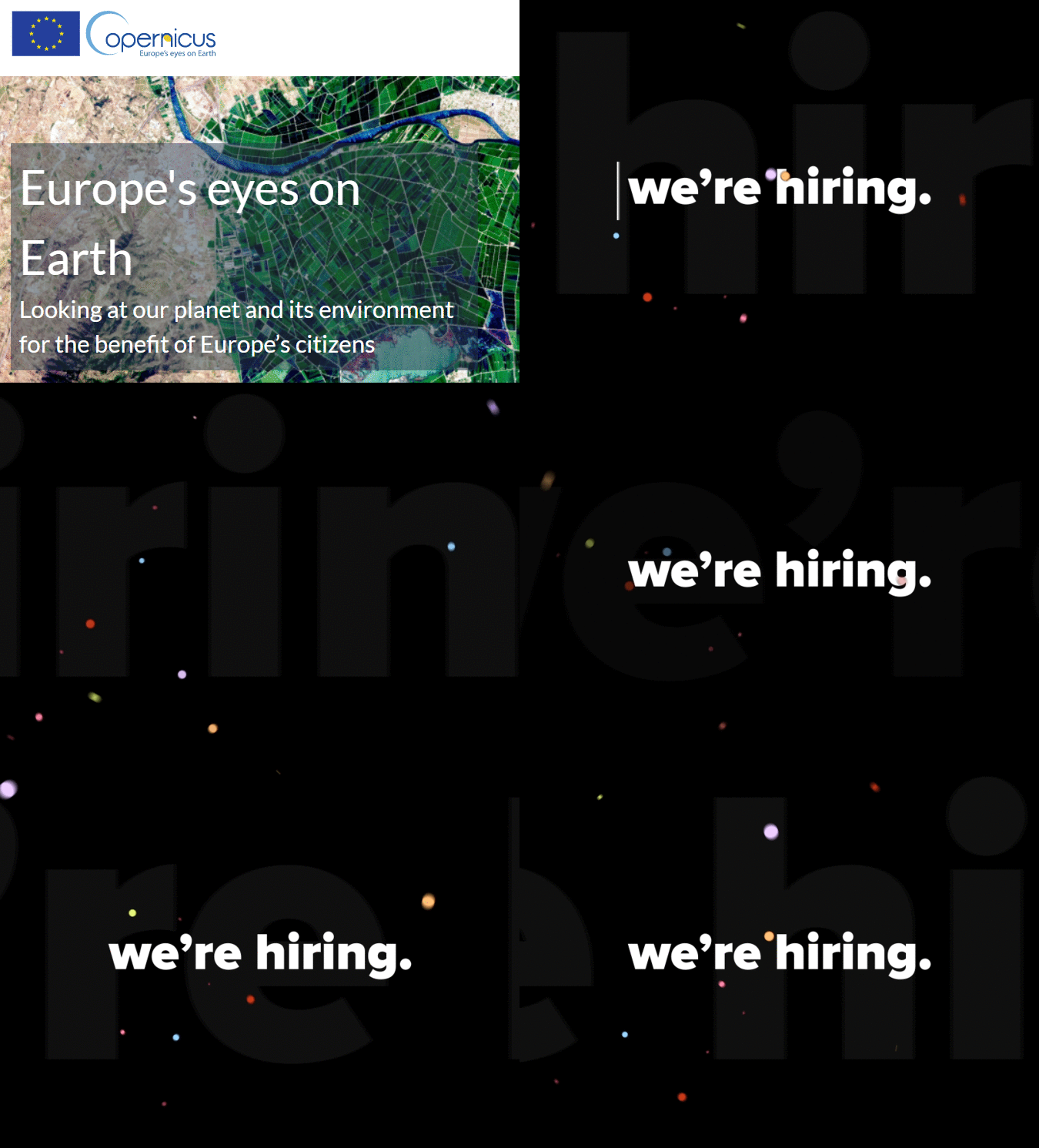
Therefore, our CoKLIMAx project aims to develop new digital products, advanced urban services and processes, such as the development of practical technical tools that capture various remote sensing and in-situ data sets for validation and further processing.
Publication about the project (english)
CoKLIMAx news article Südkurier
G20/T20 Task Force 7 "Infrastructure Investment and Financing"
At the moment, we are helping to prepare for this year's G20 meeting in Italy as a member of the "G20 global infrastructure center" academic advisory board
(G20 Global Infrastructure Hub Academic Advisory Panel). In addition, I contribute to the T20 group together with Prof. Dr. Konrad Nübel, Full Professor at the TUM Chair of Construction Process Management and Real Estate Development, and with Dr. Thorsten Jelinek, Europe Director Taihe Institute, to Task Force 7 (Infrastructure Investment and Financing) the jointly authored policy brief "Infrastructure 4.0 - Value Chain Integration Through Federated Digital Platforms". Our contribution has been selected from more than 1800 submissions. This initiative is currently sponsored by the Bavarian Construction Association (see also Policy Brief Press Release and Infrastructure 4.0 Workshop Munich).
Download the official T20 Policy Brief
Maun Science Park Project
A self-sufficient, sustainably managed district - that is what is to be created in Maun in Botswana's Okavango Delta with the help of state-of-the-art technologies. HTWG faculty and students are working together with scientists and students from all over the world to realize it. The project is intended to become a model for future life on earth.
Majestic wildlife, untouched vegetation - the Okavango Delta in Botswana is a species-rich wetland in the middle of the dry Kalahari Desert. Some people compare it to the Garden of Eden. The YouTube video "Botswana's Okavango Delta - Heaven on Earth" provides an impressive insight into the region. Without water, however, the wealth of species would disappear. And water is becoming increasingly scarce, just like other resources.
Maun, a rapidly growing urban settlement on the southeastern edge of the Okavango Delta, is home to 50,000 people. They are increasingly encroaching on the habitat of the Delta's diverse wildlife.
Currently, the project is still in its infancy: In a first step, HTWG, in cooperation with international universities, the University of Botswana, as well as local entrepreneurs and the population of Maun, wants to develop a design concept that can be implemented in the coming years.
EU Gaia-X "Smart Infrastructure Management"
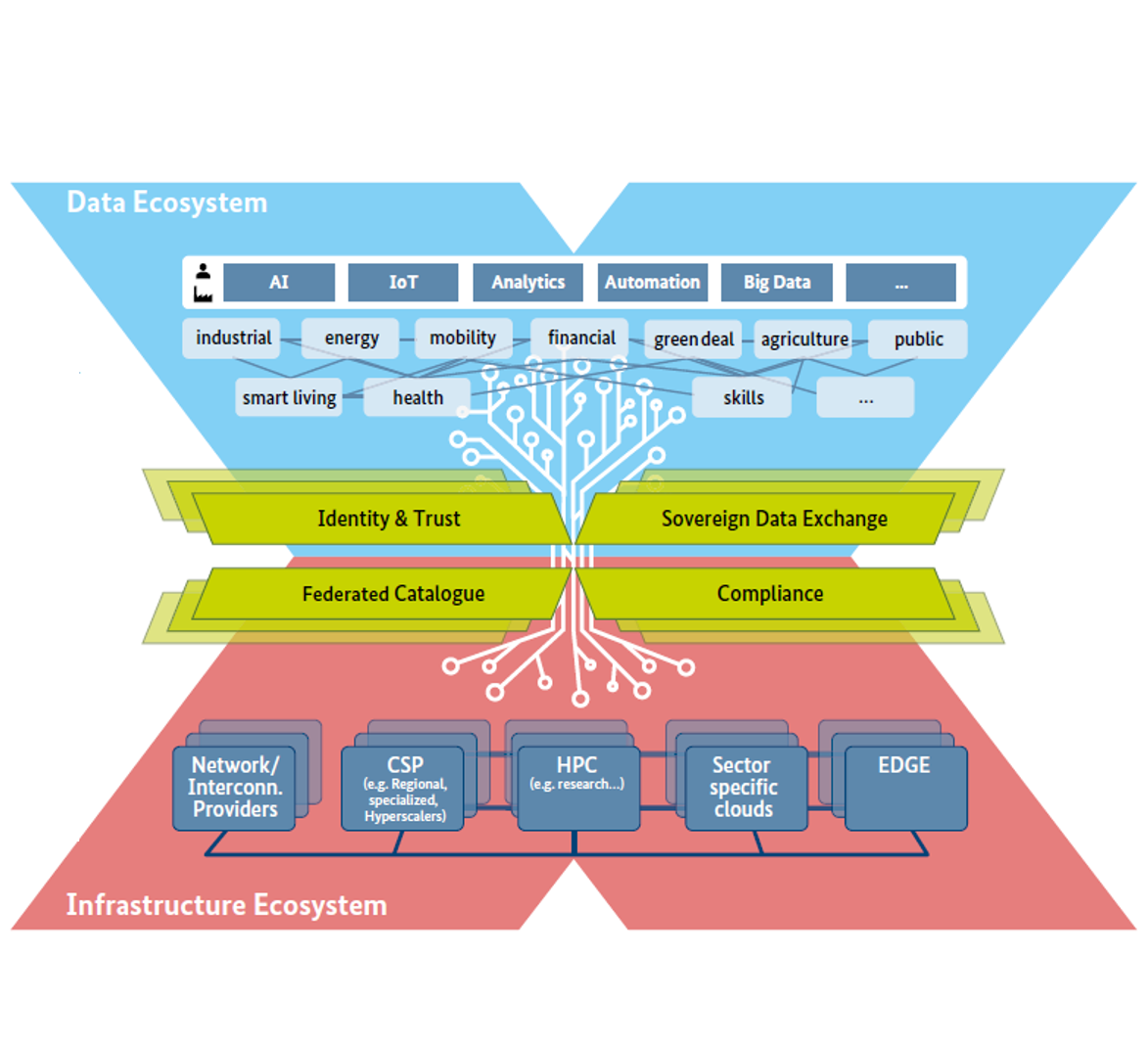
Since the beginning of 2021, we have been accredited together with TU Munich for the development of the EU Gaia-X platform. Our development will focus on the use case "Smart Infrastructure Management", which we will also investigate in the context of our G20/T20 policy development. Gaia-X "Smart Infrastructure Management" lays the foundation for better interdisciplinary collaboration in planning and ensures continuous availability of data across organizations and agencies. This not only helps accelerate planning processes, but also puts a holistic approach to planning processes into practice.
Civil Vision 2030
Together with the Technical University of Munich, we have designed the Civil Vision 2030 and implemented it in a short video. This vision for which we stand includes the systemic integration of economic and social success, the protection of the climate and the environment and the associated social responsibility, as well as the development of the talents of the future. An important foundation for Civil Vision 2030 was already laid in 2018 at the World Economic Forum.
My research interests
Infrastructure · Digitalisation in construction · Federated digital platforms · The future of engineering
I have been teaching construction economics, construction management and construction business process management at HTWG since 2019. My research interests focus on the planning and development of infrastructure and on the future of the engineering profession in light of complex global challenges and opportunities such as climate change and the fourth industrial revolution.
Current third-party-funded research projects
Walz 4.0 — Crafts and academia jointly shaping the future of construction
Walz 4.0 translates the historical principle of the journeyman tradition into today's construction industry: students and journeymen research, learn and work across borders on sustainable and circular building tasks. A joint digital learning and collaboration platform bundles curricula, practical assignments and a competence record (the "Walzifikat"). Methodologically, the project combines Design-Based Research with a multi-case study across partner regions in the Lake Constance area, Vorarlberg, Liechtenstein and eastern Switzerland. A preceding pilot funded 2024–2025 by the IBK small-projects fund (see below) prepared the methodological framework and the partner network. Lead institution HTWG Konstanz, ten consortium partners from four countries.
Consortium partners: ZHAW, OTH Regensburg, OST, FHV, University of Liechtenstein, HWK Konstanz, WK Vorarlberg, Denkmal Stiftung Thurgau, vai Vorarlberger Architektur Institut
HTWG project leadership: Bühler, Michalski, Fritz, Krötsch, Switzer, Wickert, Stark, Kubelik, Keller
Funding body: Interreg VI ABH (Alpenrhein-Bodensee-Hochrhein), project ID ABH035 | Term: 05/2025–04/2028 | Total funding: ~2.56 M € (ERDF + Switzerland + Liechtenstein)
TimFaSys — Timber façade systems for circular construction (Designed4Circularity)
TimFaSys develops parametric, prefabricated timber-frame façade systems for multi-storey skeleton structures in circular construction. The HTWG subproject builds the building-physics models (heat, moisture) and digital interfaces required to recombine dismantled façade modules in structural, thermal and data terms. The work covers biodegradable insulation materials such as hemp and cellulose, interfaces between design, simulation and production, and life-cycle and circularity analyses. The aim is a low-carbon, demountable alternative to conventional aluminium and steel façades. Embedded in the Designed4Circularity network.
HTWG project leadership: Bühler, Stark
Funding body: BMWE / ZIM (Central Innovation Programme for SMEs) | Term: 05/2025–10/2027
Past and completed research projects
CoKLIMAx II — Follow-up project
Follow-up to CoKLIMAx focused on transferring the tools and workflows developed in the main project into routine municipal use. Refinement of the interfaces between Copernicus-based remote-sensing data and local municipal planning data.
Funding body: BMDV | Term: 10/2024–05/2025 | HTWG third-party funds: 50,845 €
CoKLIMAx — Copernicus data for climate-resilient urban planning
CoKLIMAx develops low-threshold tools and workflows that allow municipalities to combine Copernicus remote-sensing data on water, heat and vegetation with local data and feed them into planning processes. The goal is efficient, regionally specific climate-adaptation and resilience measures and a stronger data basis for investment decisions under tight budget constraints.
Funding body: BMDV | Term: 11/2021–12/2025 | HTWG third-party funds: 405,360 €
Walz 4.0 — predecessor pilot (Trans-sectoral teaching and learning experience)
Predecessor pilot of today's Walz 4.0 main project: testing a trans-sectoral teaching and learning format between crafts and academia together with Denkmal Stiftung Thurgau. The pilot produced the methodological foundation and the partner network for the main project ABH035.
Funding body: IBK small-projects fund, Interreg VI ABH | Term: 01/2024–03/2025 | HTWG third-party funds: 18,356 €
Resilient infrastructure and urban climate-resilience systems in a digitally transformed, sustainable society
Research initiative at the interface of climate resilience, urban infrastructure and digital transformation. It examines systemic responses to coupled risks from climate change, urbanisation and resource scarcity, and the role of data-driven planning for resilient cities.
Term: from 2024
SuLiVaCo — Sustainable Lightweight Value Connect (green bridges)
SuLiVaCo investigates the impact of urban lightweight green bridges spanning traffic corridors on quality of life, climate resilience and value creation. The focus is on microclimatic effects, emission protection, amenity value and the contribution to revaluing disadvantaged urban districts.
Funding body: MWK Baden-Württemberg, Leichtbau Innovation Challenge | Term: 11/2021–12/2022 | HTWG third-party funds: 123,596 €
ITU Connect2Recover — Botswana / Maun Science Park
Selected from 307 submissions in the international ITU Connect2Recover competition: a blueprint for Botswana as Africa's testbed for federated digital platforms with shared, open data spaces. The team identified stakeholders, industries and use cases for an inclusive digital economy, in cooperation with the local government initiative SmartBots.
Funding body: ITU (International Telecommunication Union) | Term: 10/2021–05/2022 | HTWG third-party funds: 39,432 €
Integrating cost-benefit analysis / Federated digital platforms
Research project on the economic evaluation of federated digital platforms in construction, jointly with TU München and the German Network for Business Ethics. Methodological groundwork for later platform research.
Funding body: TU München + German Network for Business Ethics (private third-party funds) | Term: 02/2021–12/2021 | HTWG third-party funds: 19,836 €
Sensing City Konstanz — citizen-science workshop
Interdisciplinary workshop with the city of Konstanz, residents, municipal departments and companies: Smart Citizen Kits are used to gather environmental data on particulate matter, noise and gases in order to research and improve quality of life in the urban space. Citizen-science format complementing classical teaching.
Term: from winter semester 2022/23
EU Gaia-X "Smart Infrastructure Management"
Accredited member of the EU Gaia-X platform-development team together with TU München. Use case "Smart Infrastructure Management": continuous data availability across organisational and administrative boundaries as a basis for faster, more holistic planning processes.
Participation: from 2021
G20/T20 Task Force 7 "Infrastructure investment and financing"
Member of T20 Task Force 7 with policy-brief contributions on "Infrastructure 4.0 — Value Chain Integration Through Federated Digital Platforms" for the G20 summits in Italy 2021, Indonesia 2022 and India 2023. Together with Konrad Nübel (TU München) and Thorsten Jelinek (Taihe Institute). Selected from more than 1,800 submissions.
Term: 2021–2023
Interdisciplinary initiative "Gamification, Simulations & Serious Games"
HTWG-internal initiative under the DIGITALL funding line: collecting best practices for serious games, building a network and preparing real teaching projects. Conceptual contribution to "Education 4.0" and learning by doing.
Civil Vision 2030
Vision developed jointly with TU München on the systemic integration of economic and social success, climate and environmental protection, and the development of future engineering talent. Building on groundwork laid at the World Economic Forum in 2018.
Crisis as opportunity 4.0
Pandemic-related teaching initiative on the lasting integration of digital teaching and learning methods. Focus on e-teaching, e-learning and preparing future decision-makers for complex global risks.
Blueprint for Africa's transition to an inclusive and competitive digital economy
Conceptual work on use cases, stakeholders and business models for a sovereign digital economy in Africa, with Botswana as the pilot region. Methodological precursor to the later ITU Connect2Recover project.